Doctor Who and the Major Arcana: The Fool

In honour of Doctor Who day on November 23, I’m launching a new series here: Doctor Who quotes that express or align with common interpretations of the cards of the major arcana: #22DoctorWhoTarotQuotes. Each week we’ll explore a major arcana card by pairing it with a quote from Doctor Who that plays on the essence of it.

How does one come up with such a project? I was thoroughly enjoying myself recently, reading through a list of the best quotes from Doctor Who, and musing about how they cover the great panoply of human experience. A bell (but not a cloister bell) rang somewhere deep in my subconscious as I thought about the other thing I love that covers the great panoply of human experience – tarot cards! I started reading the quotes more carefully, and realized that I could easily find quotes that matched the essence of each of the cards in the major arcana. I’ll admit that some fit better than others, but some fit so well they made me grin with delight.

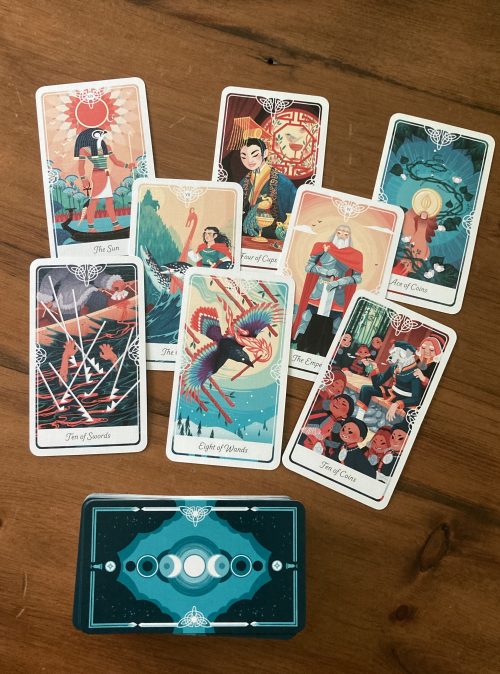
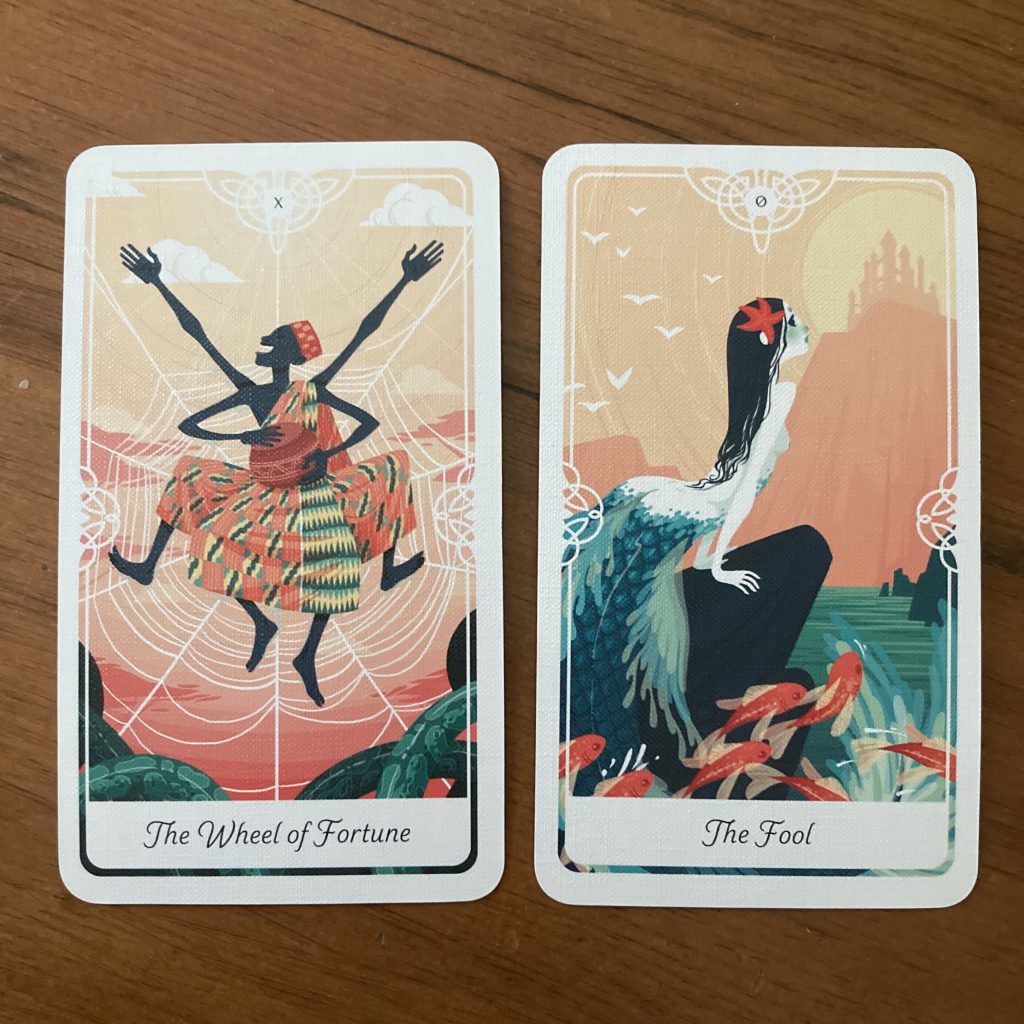
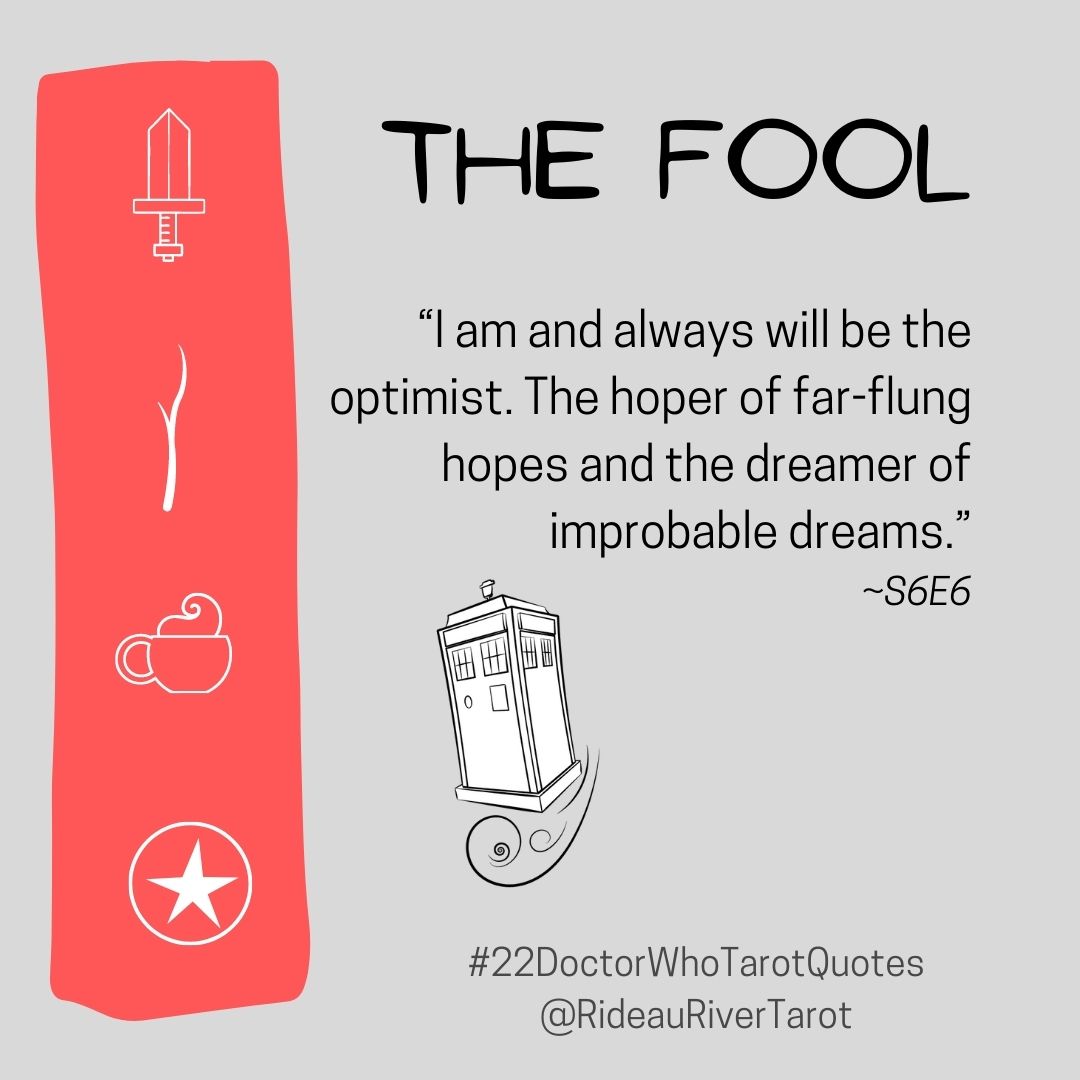
We start, as any journey should, with card 0, The Fool. Of course, the Doctor themselves is the Fool, the hero on a quest, an adventurer exploring the universe. The Fool, perhaps not coincidentally my favourite card in the deck, is about making the leap and trusting the universe to catch you. When things go really wrong, the Doctor will be to save the human race yet again. Also, the Fool is unpredictable because they live outside of convention. They are the cosmic egg, the beginning, where the adventure starts. And so of course we start this adventure with the Fool.

It was Matt Smith’s Eleventh Doctor, one of the more overtly positive incarnations of the Doctor, who said, “I am and always will be the optimist. The hoper of far-flung hopes and the dreamer of improbable dreams.” I can’t think of a more Fool-ish set of sentiments than optimism, hope, and improbable dreams. What do you think of this quote as an interpretation of, or a riff off of, the Fool? Does it work for you? Why or why not?

Join me over the next 22 weeks as I merge the wisdom of two of my very favourite things: Doctor Who and tarot cards, in #22DoctorWhoTarotQuotes.
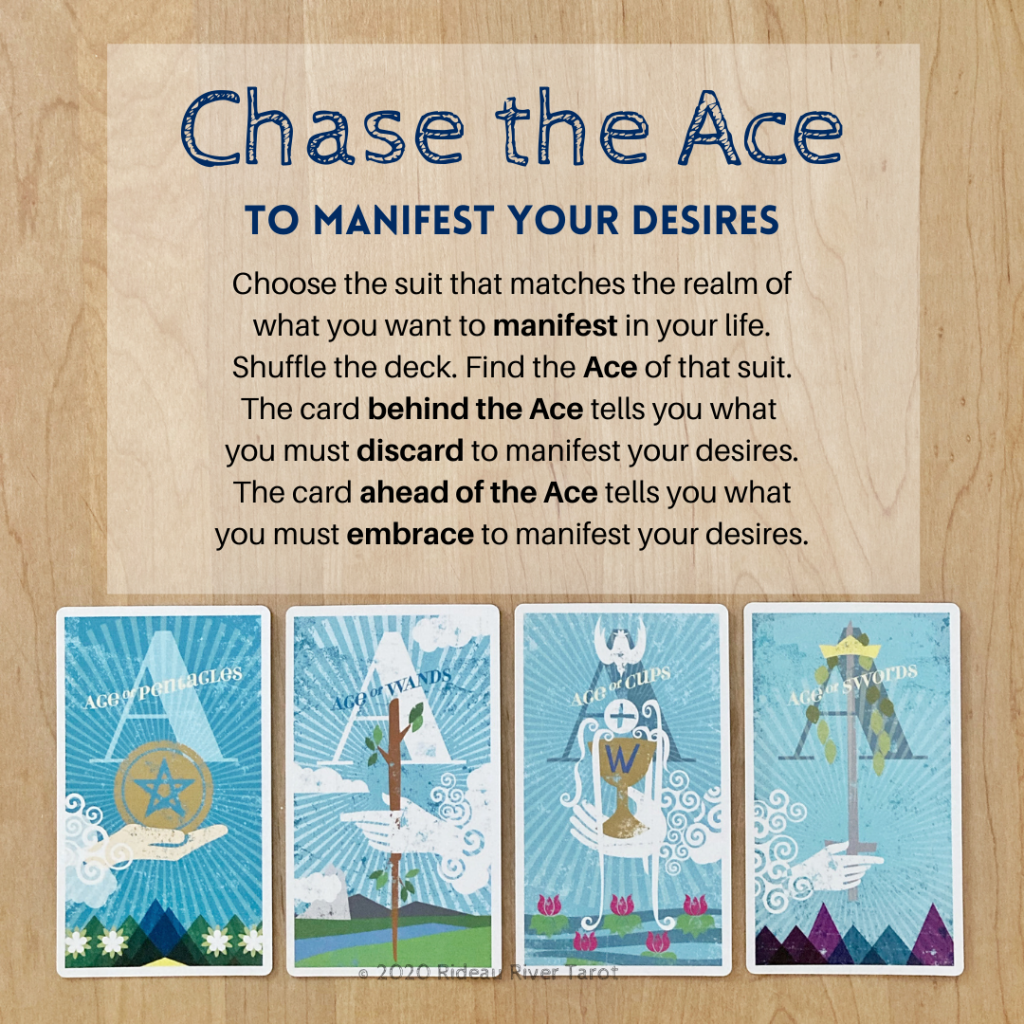
Chase the Ace: Using Aces to manifest your desires

There’s a lottery game that’s a popular fundraiser here in Canada called “chase the ace.” The basic idea is that you pay to pull a card from a deck, and if you pull the Ace of Spades, you win the pot. That’s not this game, but it is a catchy little phrase that got stuck in my head.

We know that the aces exemplify the energy of their suit in it’s most raw and powerful form. Aces are also about beginnings, so use this exercise when you’re looking to start something new, and you want to draw some of that suit’s energy into your life.

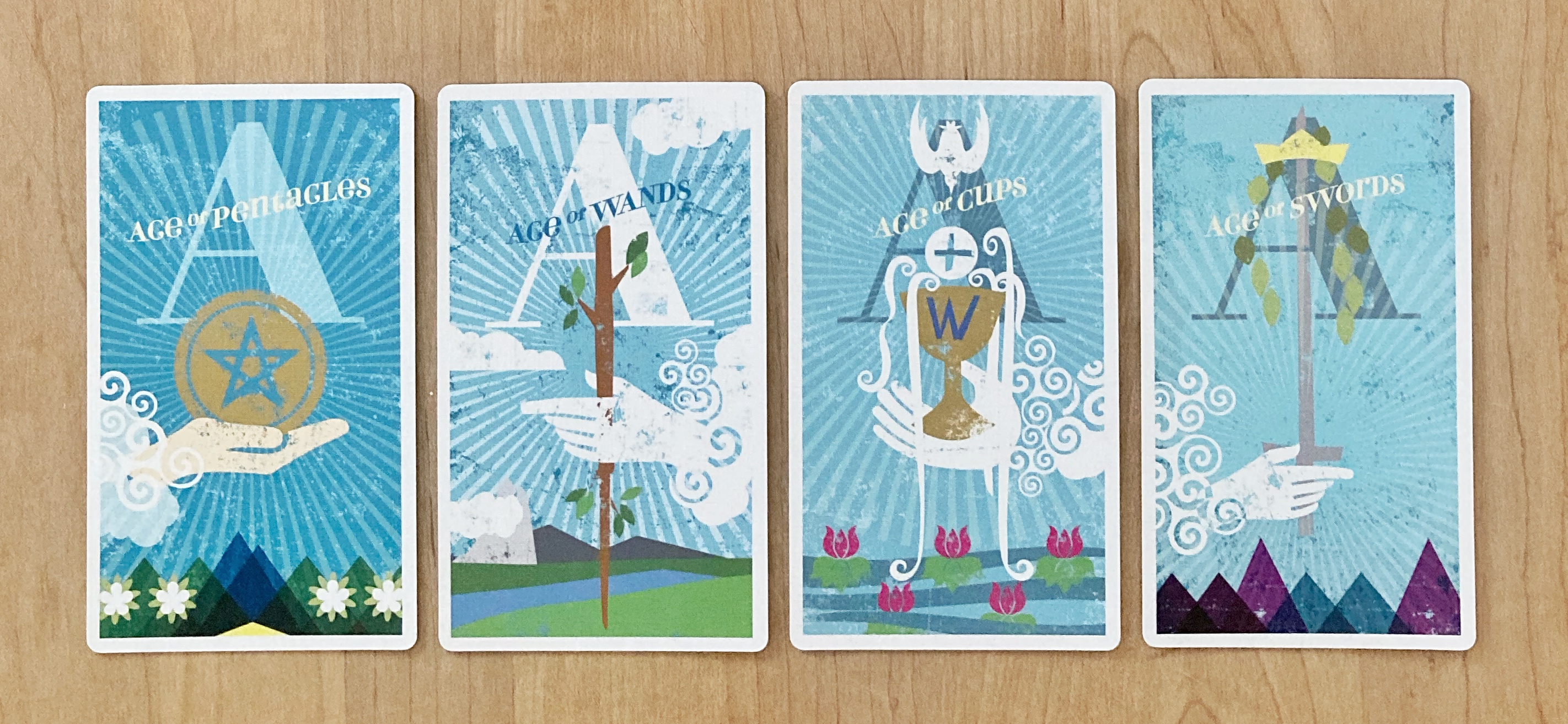
Shuffle your tarot deck well, and think about what it is you want to manifest. Think about the raw energy of the Ace you seek. Looking to manifest career stability or progress, healthy body or physical fitness, or other things in the material realm? You’re looking for the Ace of Pentacles. If you want to manifest love or deepen your intuitive connections, you’re looking for the Ace of Cups. Is it clarity of mind you seek to manifest? Search for the Ace of Swords. And finally, if you’re seeking to manifest that spark of ambition or charisma or personal power, you’re seeking the Ace of Wands.

Turn the cards face up so you can see them, and chase that Ace in the deck. When you find the Ace you seek, look to the card directly underneath it. That is what you need to let go of in order to make room for the Ace’s manifestation. Think of one thing you can let go, or one thing that is holding you back, and write it down. That’s your first action item.

Now look to the card directly above the Ace in the deck. That is where you need to focus in order to manifest the Ace’s energy. Think of one step you can take, one small concrete action you can do. Don’t just write it down; do it! Don’t let this just be a thought exercise. You can’t just wish change into action; you need to actually get things in motion.

Deck Credit: The Midcenturian Tarot Card Deck by Madam Clara

Here’s a sample of how this exercise could play out. Let’s say Norah is thinking about selling her home and buying a new one. That’s the realm of the material world, so Norah is looking for the Ace of Pentacles. She shuffles her deck and then looks through until she finds the Ace of Pentacles. Behind the Ace she finds the Three of Cups. Norah realizes that if she moves, she will have to give up her tight clique of neighbours, and she knows she will miss the regular gatherings in each other’s back yards. She makes a note to remind herself to talk to each of the neighbours so they know before the “for sale” sign appears on her lawn, and promise to stay in touch. The card on top of the Ace of Pentacles is the Wheel of Fortune. Norah realizes that selling and buying a home will be very stressful because she is a control freak and there will be many things out of her control. She decides to write up a list of things she can control and things she can’t, and jots down a few ideas for coping with each item.

Good luck, and let me know if you use this exercise and how it works out for you!

Deck review: Tarot of the Divine

I have come to realize that the reason I fell so instantly and fully in love with tarot is because they are in essence about storytelling, and I am a storyteller through and through. I love all forms of story-telling, from taking portraits with my camera (I’ve had a family photography business for more than a decade) to the rich traditions of oral stories handed down through generations.

The Tarot of the Divine by Yoshi Yoshitani mixes the traditions and archetypes of the Rider-Waite-Smith tarot with folklore, fairy tales and deities from around the world. It is, in a word, exquisite. It is a gorgeous, clever deck with an almost limitless potential for telling tarot stories. I am absolutely smitten with it.

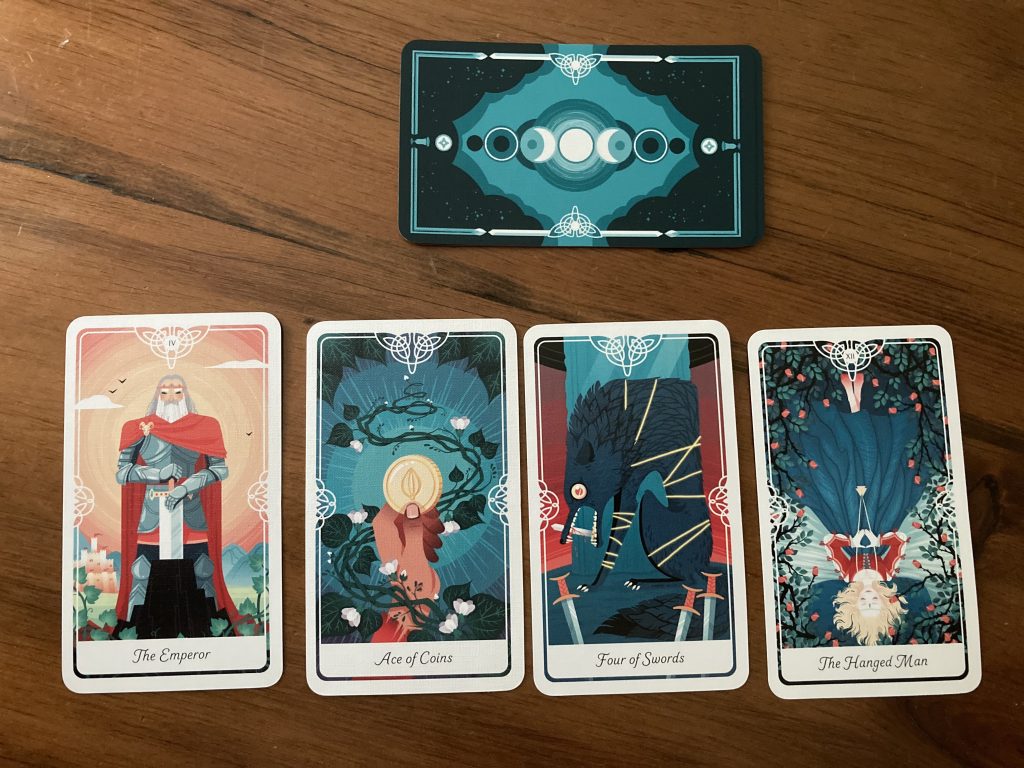
What makes this deck special? Well, first and foremost, the thoughtful matching of each card and the story it tells. The Emperor is King Arthur, who (per the guidebook) “rules over his kingdom […] with a just and firm hand. He unifies the fractious, defends the weak, and lends his knowledge and understanding to all his subjects.” And Sleeping Beauty makes perfect sense as the Hanged Man, enduring a forced pause as a symbol of stasis and the decision to hold fast. Some other pairings are less obvious, like Fenrir, the terrible wolf who brings on the end of the world in Norse mythology as the Four of Swords. But as soon as I read the interpretation in the guidebook, I loved the unique slant: “The Norse gods know that Fenrir will bring about the end of the world, so they have him bound and chained. While he still represents a threat, for now there is respite.” And the magic beans from Jack and the Beanstalk is a stroke of genius as the Ace of Coins (Pentacles): “The origins of this gift may be unexpected – like magical beans – but through nourishment and support, the benefits could be miraculous.

I love these interpretations so much, and the explanations of how each story or character ties in to the card meaning offer some fascinating new insights and interpretations – so much so that I added copious notes to my tarot notebook so I’ll have them at my fingertips for later reference. Really, I could recommend this deck on the strength of the little (not white) book alone.

The illustrations are gorgeous too, from the moon phases on the card backs (fully reversible) to the richly detailed and thoughtful illustrations of each story or deity. There are some calls to traditional Rider-Waite-Smith symbolism where it works for the card, but other cards forgo it entirely. For that reason, I am not sure this would be an easy deck for a first-time tarot reader to learn with (as I am a strong believer in learning the RWS traditional meanings first, and then moving on from there) but the guidebook could make it easy for a more intuitive reader to start with this deck.

The cards even feel good to the touch. They’re thick and lightly embossed with a linen texture, and slide together without sticking. The base colour scheme in shades of dusk is soothing and pleasant. Really, there isn’t a thing I don’t like about this deck, but I really loved just flipping through the guidebook and reading about stories familiar and new from cultures all around the world.

The wheel of fortune and the fool

But really, the proof of the pudding is in the eating, so how does it stand up in readings? Gloriously. I did a handful of three-card readings this weekend for curious friends who have never had a tarot reading before, and this deck soared on my simple question of “tell me a story about [name]”. I loved the extra nuance and depth of the readings as I contemplated how the folklore fit in to the interpretation I was seeing. It made the readings richer and more interesting.

So, in case you didn’t catch the theme, I love this deck that I pre-ordered on a whim because I love stories. I really adore it and highly recommend it, especially if you fancy yourself a teller of stories. It’s wonderful!

2020 is my Death year

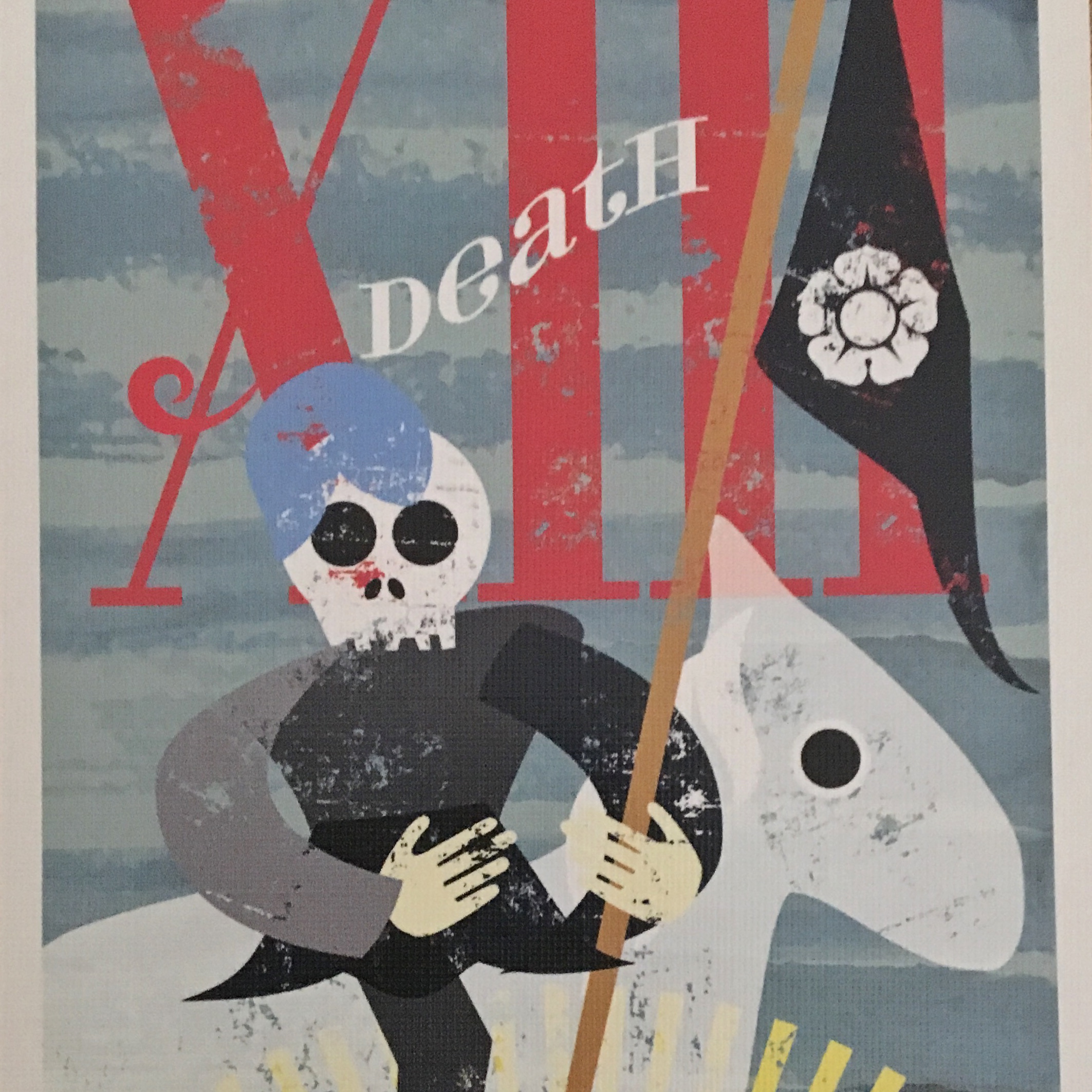
One of the most feared and misunderstood cards in the tarot deck is Death. People assume it is a predictor of a person’s death, or maybe even your death. What it actually means is much more nuanced and interesting, though. Death is about transformation, and about clearing out old habits and possessions and ideas to make room for what really matters. It’s like a Kon Mari for your soul! That’s why when I found out that 2020 is a Death year for me, I nodded my head in understanding and said, “Oh, that explains a LOT!”

I have been reading Mary K. Greer’s Who are You in the Tarot, and listening to the most recent season of the Root Lock Tarot podcast. They both talk about what are variously called birth cards, personality cards, soul cards, year cards, or beacon cards. The idea is that you distill down the digits of any date to a number that is less than 22 and interpret the aligned major arcana. You can read for your year of birth, the current year, today’s date or any significant date in your life.

For example, if your date of birth is September 3, 1970, you’d add 9 (September) plus 3 plus 1970, which is 1982. You’d then add the 1+9+8+2, which is 20. So your birth year card, variously also known as a personality or soul card, can be read as either 20, which aligns to Judgement, or further distilled down to 2+0=2, the High Priestess. Mary K. Greer goes in to all sorts of detail about constellations and hidden factor cards and all the tangential things you can look into for a really thorough analysis. If you’re interested, I highly recommend you get your hands on a copy of Who are You in the Tarot – it’s quite the deep dive, and a bit of a mathematical mind trip when you look at the patterns in the major arcanas as the years progress.

Beyond your birth/soul/personality card, you can calculate the major arcana aligned to any calendar date or year. That’s how I came to realize that this is my Death year. My day and month of birth (August 1) plus 2020 adds up to 13, which aligns to Death in the major arcana. And what an incredibly transformative year this has been. I turned 50 years old last summer and decided I was going to embrace my crone years with enthusiasm; it’s been a time of choosing to follow my heart and stop trying to live up to external measures of conventional success. I’ve let go of many, many old habits and routines (hello pandemic!) but found so many new things, not least of which is this tarot project. It’s been a year of letting go of some things to make room for new and wonderful things that make me feel like a better version of myself. It has been a tough year, even aside from the pandemic, but I feel like the sacrifices and pauses of last year’s Hanged Man year have truly made my life richer.

I was also interested to see that my personality or birth year card is the Chariot. This makes sense when I think about how I am never still for very long, and no-one close to me would disagree with the fact that I have control issues. I do love the challenge of harnessing the competing forces in my life, but being pulled in opposite directions has been a lifelong challenge.

You can apply this to calendar years as well. 2020 is an Emperor year (2+0+2+0 = 4), all about authority, rules and structure. I see this in the pandemic and how governments have had to step in to basically shut down society to prevent the spread of the virus, and imposing unprecedented laws and rules to keep us safe, but also providing safety nets in the form of financial aid packages.

So from a basic math perspective, you’d assume that since last year was the Hanged Man year for me, and this is Death, then next year would be Temperance, right? Nope. 8+1+2021 = 2030; 2+0+3+0 = 5. Next year is a Hierophant year for me, which is actually really exciting because my whole goal with my tarot project was to teach tarot in workshops. And 2021 is also a Hierophant year (2+0+2+1=5). I can hardly wait to see what next year has in store now!

Have you calculated your birth or personality or year card? Did you find them insightful?

Book review: Holistic Tarot

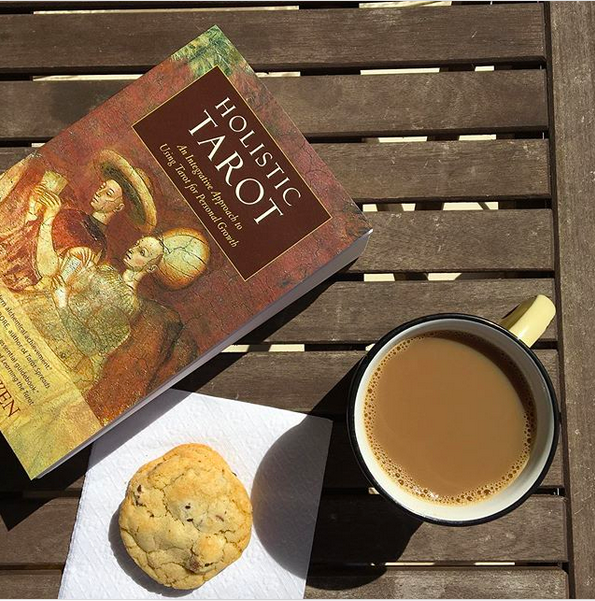
At well over 800 pages, Holistic Tarot by Benebell Wen is a brick of a book, and is truly a soup-to-nuts tarot reference booked chock full of history, facts and helpful information for tarot enthusiasts of every level of experience. However, the pedantic tone of the author wears a little thin through the first several hundred pages. And it feels like maybe the author tried a bit too hard to aim for a scholarly, intellectual study of the tarot, eliminating the magic along the way.

TL;DR? Too much swords, not enough cups and wands. 😉

The first chapter had me hooked. The author and I are in complete agreement about the nature of tarot cards and how they work. Throughout the first chapter, I underscored and made asterisks and boxes and made copious exclamations in the margins. Choosing just one pull quote to share was a task, but I particularly like this one that explains the author’s opinion on how exactly tarot works:

When we study the imagery and symbols on the cards in a tarot spread, we activate our imagination. That imagination then activates our intuition, which is often the only instrument we have that channels a clear path for us to the truth of a matter.

Benebell Wen, Holistic Tarot


I love this, and I love how she likens consulting tarot to consulting a friend or confidant. I nodded along vigourously to the the author’s explanations of how she views and uses tarot for personal growth, and I enjoyed the history of tarot in the second chapter, too. It’s not that I didn’t enjoy the rest of the book, I just found that it was a lot of information presented in a relentlessly overbearing style. The author has very clear ideas about how the tarot is or is not used, and doesn’t brook much argument or leave any room for dissension.

I think it was the section on spreads that lost me. My own approach to tarot is very flexible and utterly without dogma or ritual. I was reading a thread in a Facebook group recently about rituals and how one prepares for the act of a tarot reading. People talked about meditating, cleansing rituals, channelling spirits, and using crystals or other talismans, and for me, the extent of preparing for a reading involves giving the table a good swipe to make sure I get the crumbs out of the way. Benebell Wen advises a very disciplined and rigorous approach to the tarot, whereas I’m a little more “whatever works for you, it’s your practice” in my philosophy.

There’s a lot of solid tarot information in this book, and just about every facet of tarot seems to be at least touched upon. But for such a magical art, it’s a surprisingly dry tome. If I had to choose between the breezy, esoteric woo of Rachel Pollack’s 78 Degrees of Wisdom and the encyclopedic collection of facts that is Holistic Tarot, I think I’d lean more toward Rachel Pollack’s approach. I’m glad to have both books on my shelf, though, and I know I’ll go back to each of them in different circumstances as I progress on my tarot journey.

Have you read this one? What did you think?